
Wetlands Workshop Impacts 40,000 Acres

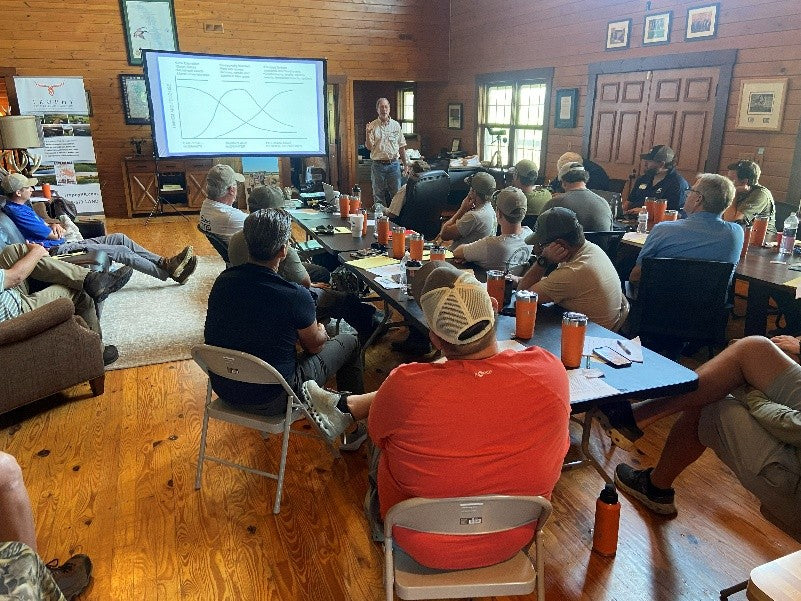
Great Rivers Habitat Alliance (GRHA) marked an important milestone this July as it hosted its 4th Annual Wetland Habitat Management Workshop, bringing together conservation‑minded participants from across the region. Twenty attendees representing four states spent three days immersed in hands‑on learning, field demonstrations, and science‑driven discussions focused on improving wetland habitat for waterfowl and wildlife throughout the Confluence and North America.
Held at GRHA’s Henges Wetlands Education and Conservation Center, the workshop continues to grow in reputation as one of the Midwest’s most practical and field‑oriented wetland management trainings. Participants included landowners, duck club managers, students, biologists, and municipal partners, reflecting GRHA’s commitment to shared stewardship and collaborative conservation.
A highlight of this year’s program was a presentation by Nate Steelman, a graduate student at Tennessee Technological University, who shared emerging insights from the Mallard and Gadwall Satellite Program. The satellite‑tracking initiative is providing unprecedented data on migration timing, habitat use, and landscape‑scale movement patterns of two of North America’s most iconic waterfowl species. Steelman’s presentation offered attendees a rare look at real‑time tracking maps, seasonal movement corridors, and how wetland management decisions on private and public lands directly influence migratory behavior.
Tennessee Technological University’s satellite transmitter program and GRHA’s Workshop have become a standout example of applied conservation science. Over four years, the GRHA Workshop has trained 65 students from nine states and Canada. Collectively, the program’s footprint now influences management decisions across more than 40,000 acres of wetlands, floodplain habitat, and agricultural landscapes.
GRHA’s workshop continues to provide an ideal venue to connect this cutting‑edge research with on‑the‑ground habitat managers who can put the findings into practice.
Beyond the scientific presentations, attendees participated in field sessions covering moist‑soil management, invasive species control, water‑level manipulation, refuge design, and wetland restoration techniques. GRHA staff and partner biologists emphasized practical strategies that landowners can implement immediately, reinforcing the organization’s mission to protect and restore the confluence floodplain through education, collaboration, and long‑term stewardship.
The continued success of the workshop reflects GRHA’s growing leadership role in regional conservation. By blending science, hands‑on training, and partnerships with universities, agencies, and private landowners, GRHA is helping shape a more resilient future for wetlands and waterfowl across the Mississippi Flyway.
More information about the workshop and GRHA’s conservation programs is available at grha.org/pages/wetland-habitat-and-management-workshop.
Related post
25
Aug
24
Aug
24
Aug
24
Aug
24
Aug
21
Aug
19
Aug
08
Jul
RECENT POSTS
24.August.2026
Sign up now MDC Youth and First-Time Hunter Waterfowl Hunts at the Henges Center
0 Comments